

Nov 06, 2025
Carl, Lee, and Tom Visit India
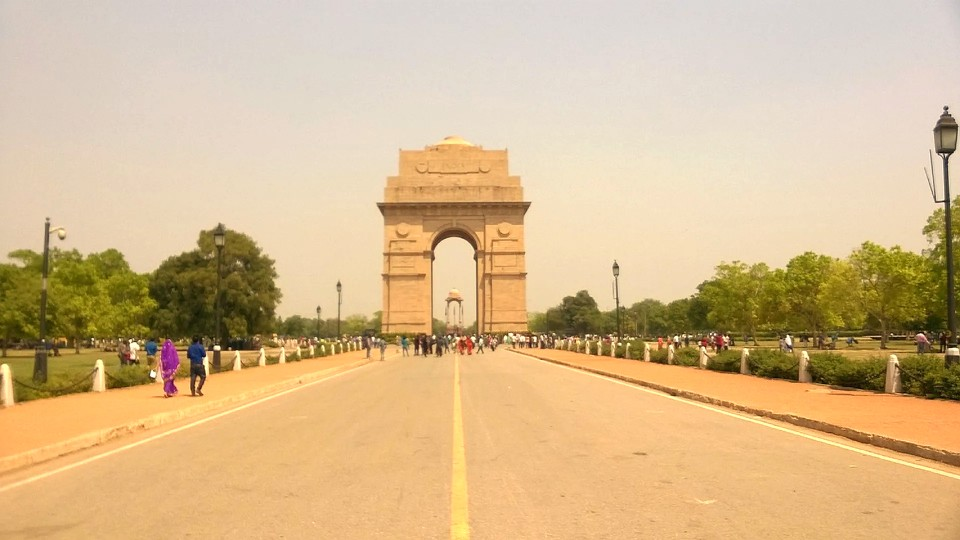
Disclaimer: The incidents and fictional characters in this story have no relation to actual events or persons.
Carl, Lee, and Tom were strolling along Rajpath, heading towards India Gate in New Delhi, discussing animatedly about something. They were PhD candidates of the UCL School of Management. Carl was the son of a schoolteacher, and Tom was from a farming background. Both were admitted to the school on merit and received scholarships. In contrast, Lee was the son of a business tycoon. They were in India to analyze the country's Energy sector.
Carl: India's per capita energy consumption is four times lower than China's, and half of the world's average.
Lee: That is an excellent opportunity for us to start a business to export oil and gas to India.
Tom: I think I will look for a job in the oil and gas sector in the UK.
Carl: But think about it—how long can India really depend on energy imports? With all that sunlight, powerful winds, rushing rivers, endless coastline, towering mountains, and a wealth of critical minerals, India could one day become a global energy powerhouse.
Tom: From what I see, India struggles to supply electricity to all its people. How could it ever become an energy-exporting country?
Carl: I agree, but the timing is favorable for India. With the rise of renewables and the hydrogen economy, India can become a global leader in energy production.
Tom: You are talking as if you know everything about India's renewable energy policies.
Carl: Not everything, but I have written a report on India's hydrogen programme. I submitted the report as one of our PhD coursework assignments, and the Professor gave me an A.
Lee: Have you noticed? You tend to see things in your own favor and love soaking up attention. My dad thinks India will expand its fossil fuel consumption. Coal consumption has increased from 864 million tons to 1,006 million tons over the last three years, with a 15% growth rate in 2023-24. Petrolium products consumption has increased from 225 million tons to 261 million tons over the last three years. Natural gas consumption has risen from 35 billion standard cubic meters in 2022-23 to 45 billion standard cubic meters in 2024-25 (https://iced.niti.gov.in/). In 2024, India became the leading driver of global oil consumption growth, overtaking China (https://www.eia.gov/todayinenergy/detail.php?id=64084). India is expanding its natural gas pipeline infrastructure from the current ~24,000 km to ~32,000 km over the next few years. Let me repeat: it is a good opportunity to jump into the business of exporting fossil fuels to India.
Tom: India is the world's second-largest crude importer. It imports 89% of its oil, 50% of its natural gas, and 30% of its coal. It also has the third-highest carbon dioxide emissions globally.
After a moment, Tom continued…
Tom: I wish India would develop and that its people would prosper. For this vision to become a reality, more citizens must move from fields to factories and offices. Such transformation demands greater energy, so if fossil fuels can help power this journey, they should be embraced.
Carl: When we burn fossil fuels, we release carbon dioxide, which is a main cause of the climate crisis today. We have agreed on this before. Why do we need to use fossil fuels when renewables are in abundance?
Carl went on…
Carl: Green hydrogen is emerging globally as a viable alternative to fossil fuels, and India is taking a leadership role in developing a hydrogen economy. It launched the National Green Hydrogen Mission in 2023 with the goal of producing 5 million tons of green hydrogen annually and generating 125 GW of power by 2030. With ample renewable resources such as solar, wind, and hydro power, India can generate low-cost, clean electricity to produce green hydrogen.
Lee: With current geopolitical tensions, some countries are reversing their green hydrogen policies.
Tom: India will not and should not reverse its green hydrogen policy for the sake of energy security.
Carl: India is steadily moving forward with its green hydrogen mission. As of now (Nov 2025), in the steel and refinery sectors, India has started six hydrogen projects with 70 MW of electrolysers, producing 10,000 tons of green hydrogen each year. In the next three years, it plans to install 1,485 MW of electrolyzers to produce 637,400 million tons of hydrogen per year for the fertilizer sector. However, these projects make up only 13% of the 2030 target. India is also checking whether its current natural gas pipelines can blend up to 15% hydrogen to provide industries with a cleaner fuel.
Tom: If India achieves its 2030 goals of green hydrogen, it will reduce the country's cumulative fossil fuel imports by an estimated US$12.5 billion. India has the potential to attract US$95.3 billion in investments and generate more than 600,000 jobs. Maybe I should look for a career in the green hydrogen sector in India.
Lee: But the green hydrogen sector has not grown much worldwide. There are no major buyers yet. The main reason is that green hydrogen costs five to twelve times more than gray hydrogen. The same is true in India. We need new technology to lower the cost. Right now, with current electrolyzer technology, it does not make business sense.
Carl: India has built a strong renewable energy sector. The country plans to reach 500 GW of non-fossil fuel power by 2030. It has already met its goal of getting 50% of its power from non-fossil sources ahead of schedule. Cheaper renewables have already lowered the price of green hydrogen in India. The country also has a lively startup scene. Startups are working on new technologies. For example, Hyurja (https://www.hyurja.com/) is developing methane cracking technology and says its low-carbon hydrogen is five times cheaper than hydrogen made by electrolyzers.
After a pause, Carl declares, "India is poised to become a world leader in the Green Hydrogen sector."
Tom and Lee say in unison, "Why not start a startup in the UK to import Green Hydrogen and its derivatives from India?"
Author: Dushyant C. Kothari