

April 26, 2026
China is poised to dominate the Green Hydrogen landscape by 2030
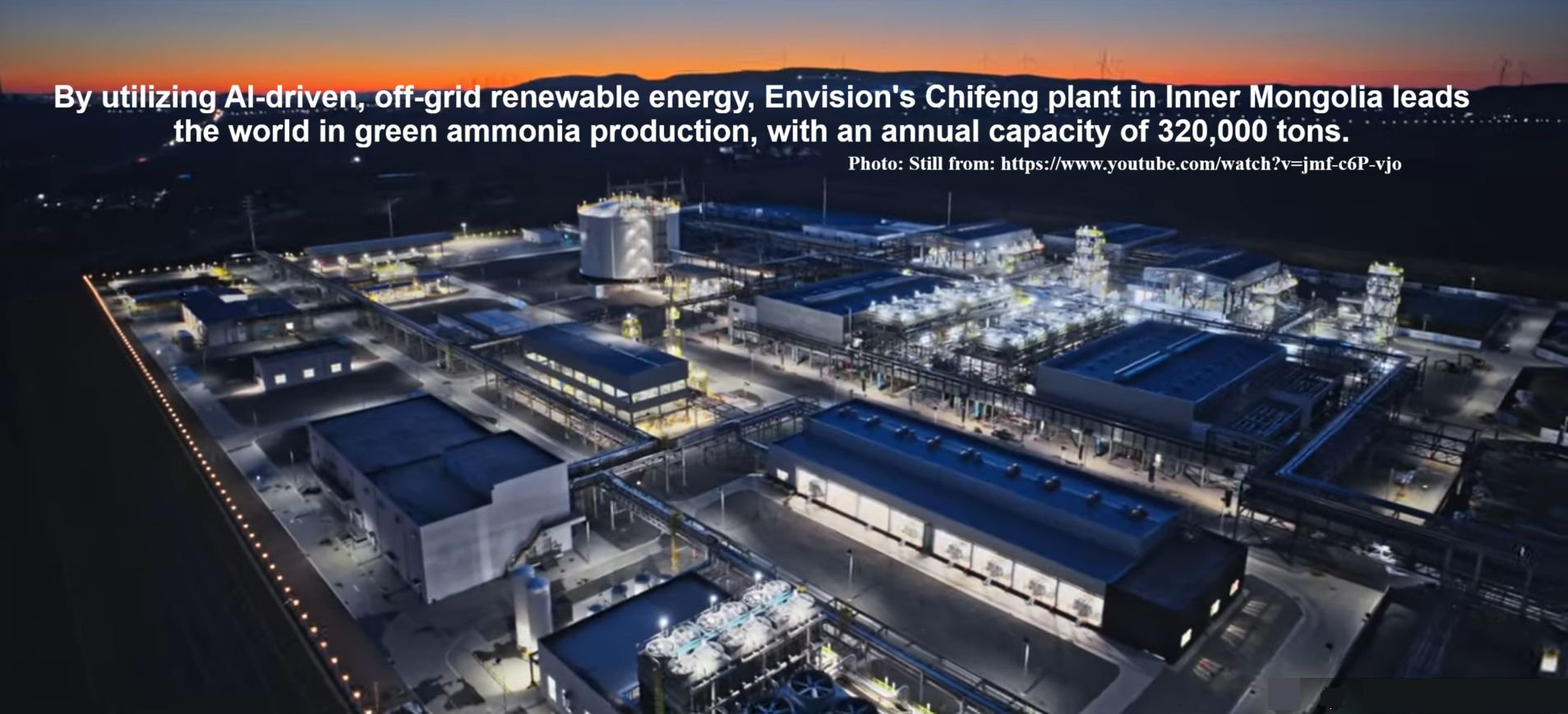
By 2030, Beijing aims to lead the Green Hydrogen landscape, following the same playbook that made it a world leader in Wind and Solar. Having mastered the art of deploying massive industries at scale, China is now accelerating its efforts in the Green Hydrogen industry.
While our attention remained focused on wars and election campaigns, China silently presented its revised Green Hydrogen policy in its 15th Five-Year Plan on 12th March, 2026. It is a paradigm shift from what the other large economies have proposed so far. China has elevated Green Hydrogen to Strategic-Industry Status, placing it alongside nuclear fusion and quantum computing for advanced-state investment, rather than just meeting Climate Change goals. It has now formally designated Green Hydrogen Energy as a future industry. It has shifted the focus from experimental demonstration to large-scale, market-oriented industrial deployments. The Green Hydrogen Industry is now integrated with the energy, AI, chemical, infrastructure, transport, and steel industries, among others. The policy also strikes a balance between export-driven trade and domestic consumption of Green Hydrogen.
Hydrogen energy implementation will be coordinated centrally across the entire supply chain, while allowing regions such as Inner Mongolia to leverage their specific strengths. The policy promotes deep integration across hard-to-abate sectors, including methanol, ammonia, and steel production. The technological focus will be on developing industrial-scale PEM and solid oxide electrolyzers. Hydrogen will be reclassified as an energy resource rather than a hazardous chemical, allowing developers to build infrastructure outside designated chemical parks.
Subsidies will be replaced by reward-for-performance based on actual hydrogen offtake and application scale. Green hydrogen will be used for grid-scale seasonal energy storage. The National Emissions Trading Scheme (ETS) will include the chemical and metal sectors, providing a financial incentive for these industries to switch to green hydrogen.
There will be 10,000 kilometers of zero-carbon transportation corridors, integrated with 100 zero-carbon industrial parks. More than 3 million tonnes of green hydrogen will be produced annually by 2030. The vast renewable energy production basins in the west and north will be connected to industrial demand clusters in the east by more than 5,000 km of hydrogen pipelines. The cost of green hydrogen is targeted at $1.50–$1.75/kg to enable widespread application. Long-term projections in the Plan suggest that hydrogen could eventually account for up to 8% of total national energy consumption.
If this strategy succeeds, the implications will go far beyond decarbonization. It could reshape global supply chains and redefine energy trade.
Author: Dushyant C. Kothari